The True History of Skateboarding in Portugal – Chapter I
Exclusive of Site Nacional de Skate
Chapter I
Introduction
Skateboarding in Portugal has a History that cannot be forgotten, and it must be kept alive so that all generations can know it, especially new practitioners, but also all entities and institutions that nowadays try to promote this sport in Portugal. Only by truly knowing the past, and all the work developed by the old Skate Clubs and Associations, and the “old school” Skaters, will it be possible to continue the pioneering values and principles of Skateboarding, humility, inclusion, and mutual help.
Skateboarding is not just a sport, it is a way of being in life, and knowing its History and Culture means being proud to be a Skater.
SiteNacionaldeSkate.pt, is the oldest website about Skateboarding in Portugal, and therefore has the responsibility of making this past known, for that we used memories and archive images, ours and those of those who collaborated with us in preparing this article, and for which we are very grateful.
Here we pay tribute and recognition to all those who were the pioneers, and being the first time that someone in Portugal has made this historical record, it is very likely that there are many old newspaper clippings or photographs still to be shared… if so, please send them and we will be happy to include them.
Note: This article will be divided into several publications to better understand the evolution of skateboarding through the ages.
The 70’s and 80’s
Due to the years of Fascism in Portugal, it is estimated that Skateboarding, among other sports, cultures, styles of music, etc., only emerged after the Revolution of April 25, 1974, because until then there were many restrictions on individual freedom due to the Dictatorship that governed the country.
It is most likely to have been introduced by immigrants, returning from former Portuguese colonies, or even by foreigners who visited Portugal. It is not possible to define it exactly, but it is estimated that skateboarding in Portugal was introduced in the late 70’s and early 80’s.
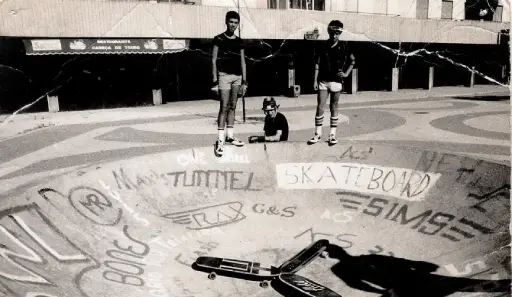
It became quite popular because it was seen as a kind of counterculture, an anti-system posture with no rules to follow. Skateboarding provided a world of new possibilities, which did not exist in a normal sport that had rules, uniforms, etc.; it allowed people to be free to be themselves, without fear of judgment because no skater would judge someone just for being “different”.
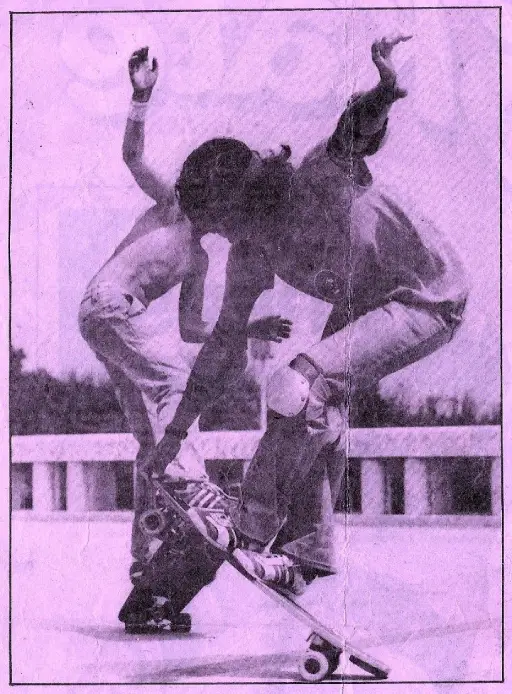
“1st National Skateboarding Contest” em 1979.
However, post April 25th society was not prepared for the explosive increase in young skateboarders, and their evident rebelliousness meant that skateboarders began to be seen as criminals. There were no Skateparks, so many skaters often went to construction sites to access material and thus be able to build ramps with their own hands.
This construction was based on “trial/error” because there was no prior technical knowledge on how to build this type of structures, this learning process became known as DIY (Do It Yourself) and which is still a very common feature among current Skaters today. The taste we feel in life for doing things with our own hands is a kind of genetic inheritance from old school Skaters.


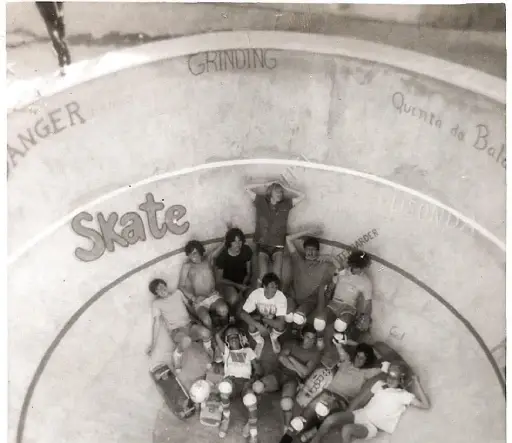
At that time you could be arrested just for carrying a skateboard in your hand! Few Politicians or Mayors tried to find solutions, yet those who did couldn’t find much better in terms of construction, as there was also a general lack of technical knowledge, despite everything, these initiatives should be positively noted because it was thanks to them that the first skateparks began to emerge.
The first skatepark built in Portugal was in Quinta da Balaia, in 1986 in Algarve.
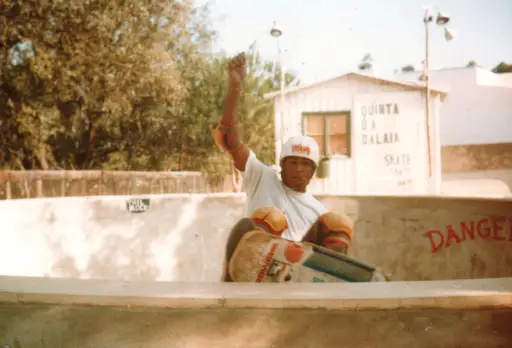
But unfortunately it only lasted a few years as it was demolished to build a Hotel, and just like that the first like many others that had a similar end because it was not something that was of interest, or was well regarded by the local authorities.
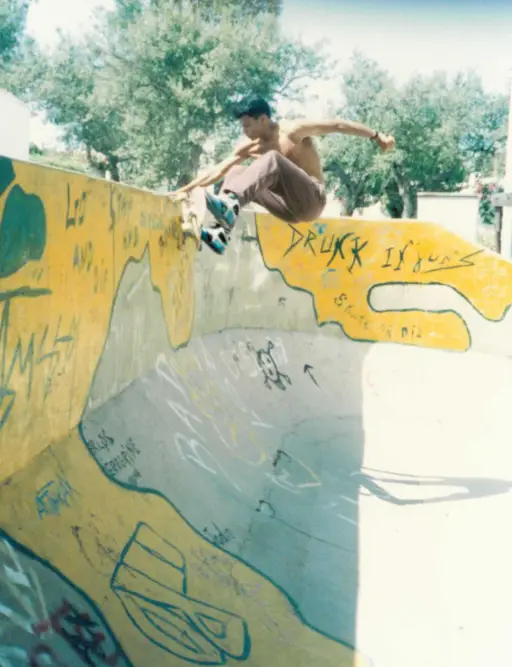
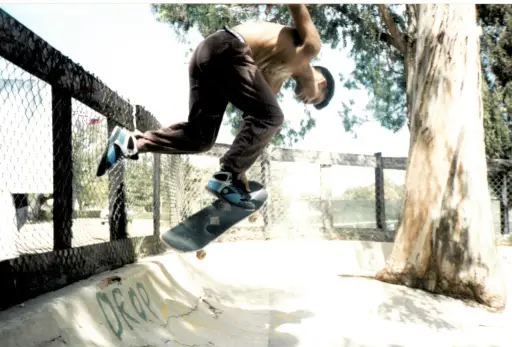
But even without infrastructures, Skateboarding was growing in the country at the speed of light, it was something fresh and innovative among the youth, the first Skateshops began to appear, with material coming from outside the country, then the first local contests appeared with demonstrations by skaters who were also locals and already had some experience.
These contests were also often a way for young people to try skateboarding for the first time. They were always contests with little support, or even without any type of support, whose organization was the responsibility of skaters who came together in a more or less informal or spontaneous way, and as always, made it happen through the spirit of unity and love for Skateboarding.
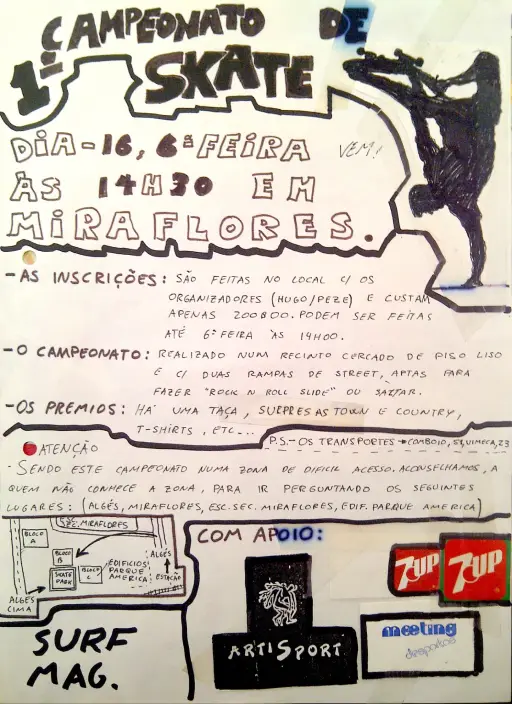


It was then that in the 80s, news about Skateboarding appeared in the country for the first time, published in Portuguese newspapers in the sports sections, which was a huge joy, and one of the first victories achieved in terms of national disclosur.


The next chapter of “The true History of Skateboarding in Portugal” will be released soon, so stay tuned and until then continue to follow all the current news about Skateboarding on our website sitenacionaldeskate.pt and in our Instagram @sitenacionaldeskate